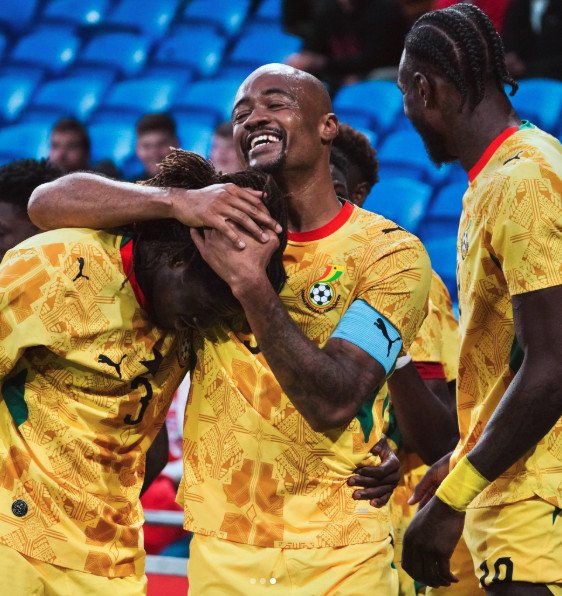
The Black Stars’ AFCON 2027 qualifying campaign has descended into crisis, with Ghana’s failure to register a single shot on target until the 75th minute against Ivory Coast exposing a team in freefall. The 1-0 defeat—scored from a Franck Kessie penalty in the second half—was the culmination of a nightmarish display, where Ghana’s possession (61%) was rendered meaningless by a lack of structure, individual errors, and a defensive collapse that allowed the Ivorian attack to dictate the tempo. The result is not just a setback but a warning: without urgent intervention, the Black Stars risk becoming the first African heavyweight to miss consecutive AFCON tournaments since the format’s expansion.
The tactical breakdown was immediate and devastating. Ghana’s midfield, led by players like Jordan Ayew and Mohammed Kudus (both sidelined by injury), struggled to dictate play, while the defense—despite a valiant effort from Lawrence Ati-Zigi—was repeatedly outmaneuvered. The Ivorian frontline, spearheaded by Malick Yalcouye’s early strike, exploited Ghana’s reluctance to press, with the Black Stars’ forward line failing to connect on even the simplest of through balls. The absence of key players, including Manchester City’s Antoine Semenyo and Tottenham’s Kudus, has left the team without its usual creative spark, while younger talents like Renji Kochi have been thrust into unfamiliar roles without the necessary tactical refinement.
The fallout has been swift and severe. Social media platforms have erupted with calls for the resignation of Ghana Football Association (GFA) leadership, with critics pointing to a systemic failure that extends beyond individual coaching decisions. The Black Stars’ inability to qualify for AFCON 2025—after a 20-year streak of participation—has already tarnished their legacy, and the current campaign risks cementing their reputation as a team unable to perform when it matters most. Yet, the blame is not solely on head coach Kwame Kaye (Kerik). Insiders suggest deeper institutional issues—ranging from player development pipelines to governance corruption—are at play, with the sports ministry and presidential office now under pressure to intervene before the damage becomes irreversible.
With only three games remaining in this international break, Ghana’s path to qualification now hinges on an improbable turnaround. Their next fixture against Gambia on September 29 will be a test of whether the team can regroup, but even a win may not be enough. Ivory Coast, already on course for a top-two finish in Group C, has the depth to dominate, while Somalia—despite their modest record—could exploit Ghana’s vulnerabilities. The Black Stars’ only realistic hope lies in a miracle: a combination of tactical overhaul, player cohesion, and sheer luck. Without it, they will join Cameroon and Nigeria as the latest African giants to stumble in the qualifying gauntlet, further eroding the continent’s footballing prestige on the world stage.