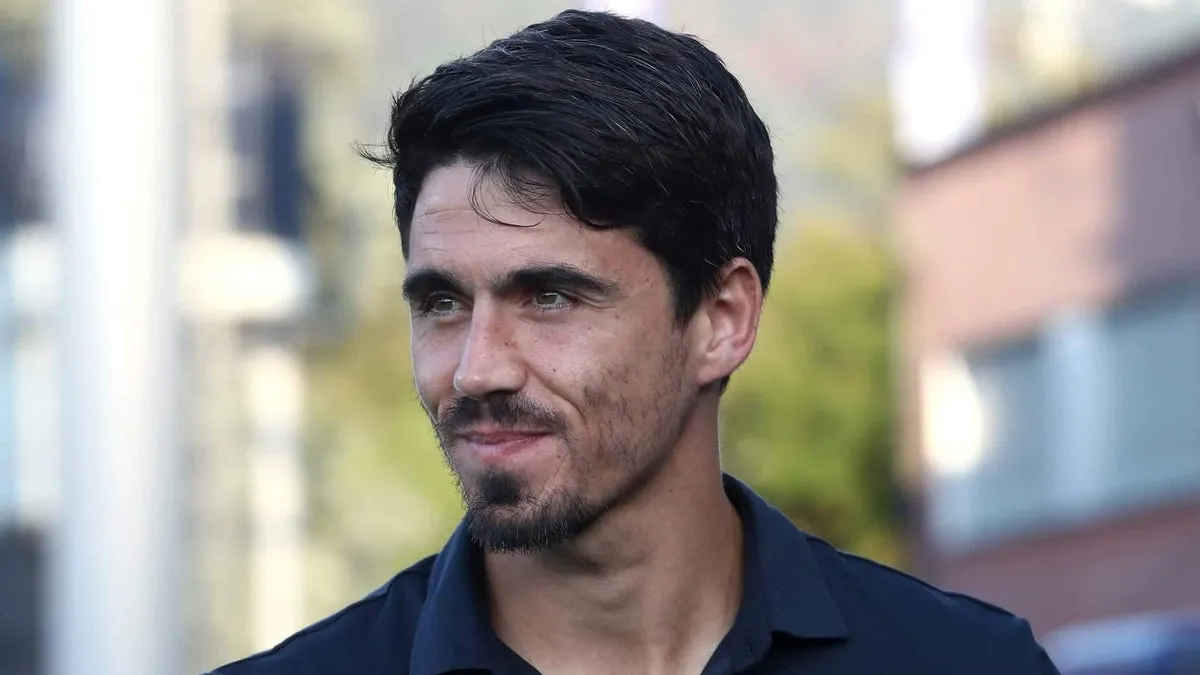
Carlos Cuesta’s departure from Parma marks the end of a brief but turbulent tenure that mirrored the club’s own struggles in Serie A. The 31-year-old, who spent two seasons as Mikel Arteta’s right-hand man at Arsenal, was appointed in June 2025 to replace Cristian Chivu in a role that demanded immediate impact. Yet, Parma’s opening five league matches have yielded only one victory—a 2-1 win over Genoa before the international break—leaving the club 10 points adrift of league leaders Milan. The numbers don’t lie: Cuesta’s Parma has failed to break the deadlock in a league where consistency is the difference between survival and relegation.
The club’s official statement framed the split as a ‘mutual decision,’ emphasizing ‘the necessary conditions for the continuation of the sporting project’ were no longer met. The phrasing suggests internal friction over direction, a common pitfall for managers in their first independent roles. Parma’s recent form—three losses in four—has exposed tactical vulnerabilities, particularly in midfield, where Cuesta’s ability to develop young talent was expected to be his calling card. Yet, the absence of a clear path forward has left the club’s hierarchy scrambling, with Monday’s training session already handed to the technical staff pending a permanent replacement.
Cuesta’s exit isn’t just a personal setback; it’s a symptom of Parma’s broader instability. The club’s financial constraints and reliance on mid-table competition mean every managerial decision carries weight. His departure follows a pattern of short tenures in Serie A, where clubs often prioritize short-term fixes over long-term vision. The question now is whether Parma can stabilize its backroom before the winter window, or if another high-profile name will be needed to turn the tide.
For Cuesta, the move underscores the challenges of transitioning from assistant to head coach. His time at Arsenal was defined by Arteta’s pragmatic, possession-based philosophy, but Parma’s immediate needs demand a different approach—one that can navigate the league’s physicality and tactical unpredictability. Whether he returns to the coaching ranks elsewhere or pivots to a different role remains unclear, but one thing is certain: his tenure in Emilia-Romagna will be remembered as a missed opportunity in a league where patience is a luxury few clubs can afford.
The fallout from Cuesta’s departure will ripple through Serie A’s midfield. Parma’s struggles have already cost them ground, and without a cohesive plan, the club risks further erosion. The league’s top sides will watch closely, not just for the next Parma manager, but for how quickly the club can rebuild trust—both on and off the pitch.