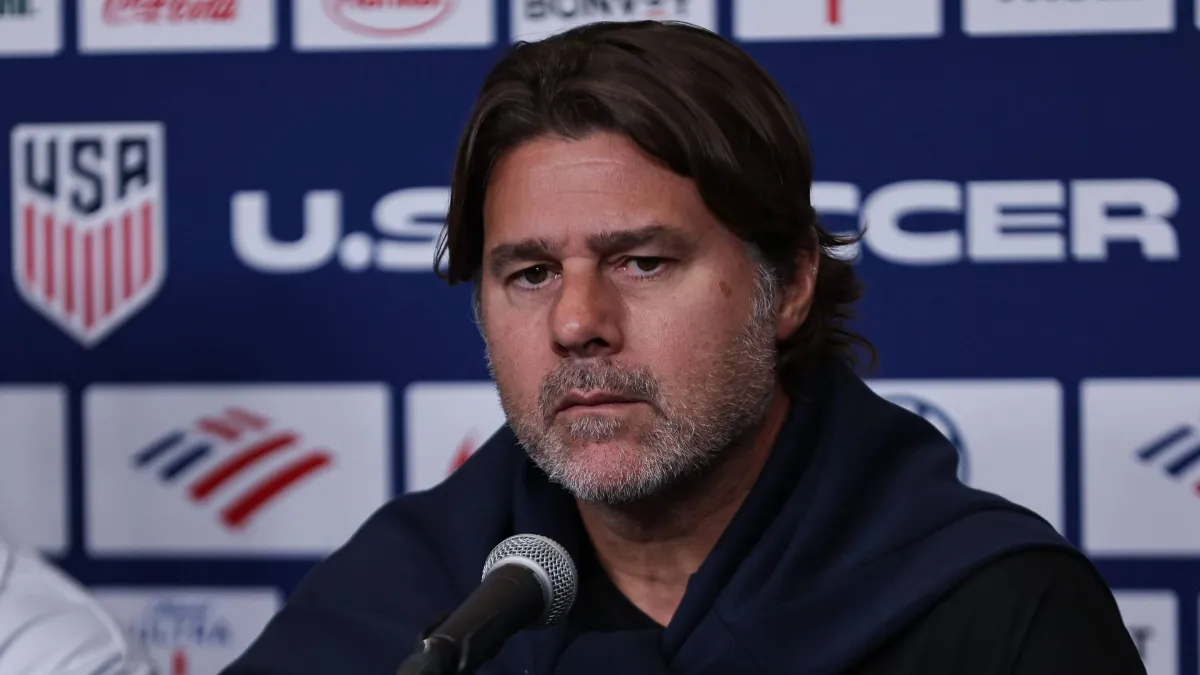
Mauricio Pochettino’s return to management has been framed as a homecoming, but his words on Tottenham Hotspur’s time under his leadership tell a different story—one of ambition outpaced by an unstoppable force. The USMNT coach, now navigating the complexities of international football, has questioned whether any punishment could ever truly deter Manchester City’s relentless march to dominance. His remarks, delivered with the candor of a man who knows the pain of facing Guardiola’s system, underscore a truth Tottenham has struggled to reconcile: even with Champions League finalists and Europa League winners on their roster, they were never built to compete with City’s blueprint.
The 2018–19 season was supposed to be Tottenham’s breakthrough. Pochettino’s side, packed with world-class talent—Harry Kane, Son Heung-min, Christian Eriksen, and Dele Alli—had just reached the Champions League final, a feat that should have cemented their status as Premier League contenders. Yet by the time the summer transfer window rolled around, the club’s approach had shifted. Instead of reinforcing their core, they gambled on unproven talent: Jack Clarke, Tanguy Ndombele, Giovani Lo Celso, and Ryan Sessegnon. The logic was clear—innovation over experience—but the results were immediate. By November, Pochettino was gone, his departure marking the beginning of a downward spiral that would see Spurs lose their unbeaten Premier League record in a chaotic 4-1 defeat. The writing had been on the wall long before Jose Mourinho arrived, but the damage was already done.
Pochettino’s frustration isn’t just nostalgia; it’s a tactical indictment. His team, built on defensive solidity and midfield control, was no match for City’s fluidity. Guardiola’s side didn’t just outplay Spurs—they outthought them, exploiting gaps in a system that relied on predictability. The former Spurs boss’s blunt assessment—‘Is there even a punishment severe enough?’—hints at the futility of trying to curb City’s dominance through rules alone. It’s a sentiment that resonates beyond Tottenham, as other Premier League clubs grapple with the same reality: no amount of tactical ingenuity can permanently unseat a team that operates at a different level of efficiency.
The irony is that Tottenham’s struggles weren’t just about City. Pochettino’s own departure was as much about internal friction as it was about on-field results. A boardroom source confirmed what many had suspected: the tension between Pochettino and club owner Daniel Levy had become unbearable, a toxic dynamic that wore down both men. The club’s financial might—once a shield—became a liability when it couldn’t translate investment into sustained success. The Europa League triumph under Ange Postecoglou was a fleeting high, a reminder of what Tottenham could achieve when the right pieces aligned. But without that same level of cohesion, the club’s identity remained fractured, a constant work in progress that never quite delivered.
Now, as Pochettino returns to Spurs—this time as a coach rather than a player—his words carry weight. They’re not just a critique of the past, but a warning of what lies ahead. The Premier League’s power dynamics haven’t changed. City remains the benchmark. And for Tottenham, the question isn’t whether they can compete, but whether they can ever truly outthink the machine that has made them look like amateurs.