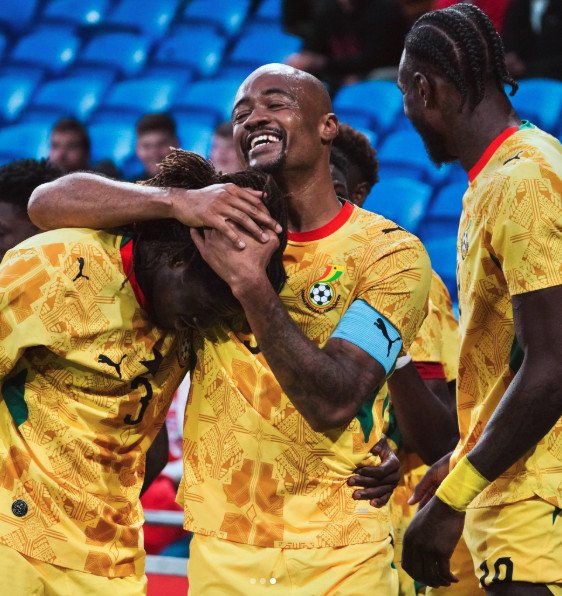
The Africa Cup of Nations qualifiers delivered a masterclass in underdog triumphs and elite collapse on Tuesday, as Ghana and Nigeria—two of Africa’s most storied footballing nations—were humbled in humiliating fashion. Ghana, who reached the World Cup last year and boast a squad brimming with Premier League experience, surrendered a two-goal lead to The Gambia in a 4-2 home defeat that left their supporters’ patience frayed. Ernest Nuamah and Felix Afena-Gyan had opened the scoring within 33 minutes, but Muhammed Badamosi’s penalty and Omar Colley’s clinical finish in the second half restored parity. The Gambia’s Ebrima Colley then sealed the result with a brace, including a substitute strike, to deliver a result that will haunt Ghana’s campaign from the outset. The match descended into chaos in the final stages, with home fans venting their frustration by hurling bottles onto the pitch—a stark reminder of the pressure veteran coach Carlos Queiroz now faces after a dismal start to Group C.
Nigeria’s Super Eagles, who reached the semi-finals of the last Africa Cup of Nations in January, suffered an even more crushing defeat. Despite fielding seven Premier League players, they were outplayed 3-0 by Guinea-Bissau in a match where the margin of defeat could have been even greater. The result underscores a persistent tactical and mental fragility that has plagued Nigeria’s recent international campaigns. While the Super Eagles remain a formidable force, their inability to translate individual talent into consistent results—particularly in high-pressure qualifiers—has become a recurring narrative. The loss to Guinea-Bissau, a nation with a fraction of Nigeria’s resources, signals that the path to the 2027 finals will be far from straightforward.
Elsewhere in Group C, Cape Verde—who electrified the world with their World Cup run—fell to Rwanda at home, while Algeria fought back from two goals down to avoid a shock defeat. The contrast between these results and the performances of heavyweights like Egypt, Morocco, and Senegal—who all secured away wins—exposes the growing unpredictability of the qualifiers. For Ghana and Nigeria, the defeats are not just tactical setbacks but symbolic blows to their regional dominance. Both nations have long been expected to lead Africa’s charge in international football, yet their struggles in recent qualifiers suggest a need for urgent introspection. The road to Kenya, Tanzania, and Uganda in 2027 will demand more than star power; it will require tactical cohesion, mental resilience, and a willingness to adapt to the evolving dynamics of African football.
The implications of these results extend beyond individual campaigns. Ghana’s collapse has reignited debates over the effectiveness of Queiroz’s system, while Nigeria’s failure to capitalize on their squad depth raises questions about their managerial rotation. Meanwhile, smaller nations like The Gambia and Guinea-Bissau have proven that footballing progress is not solely measured by population or financial resources. Their ability to exploit defensive vulnerabilities and maintain composure under pressure offers a blueprint for how underdogs can challenge the continent’s giants. As the qualifiers progress, the narrative of Africa Cup of Nations football is shifting—from one of inevitability for the traditional powers to one of unpredictability, where every match could rewrite the script.