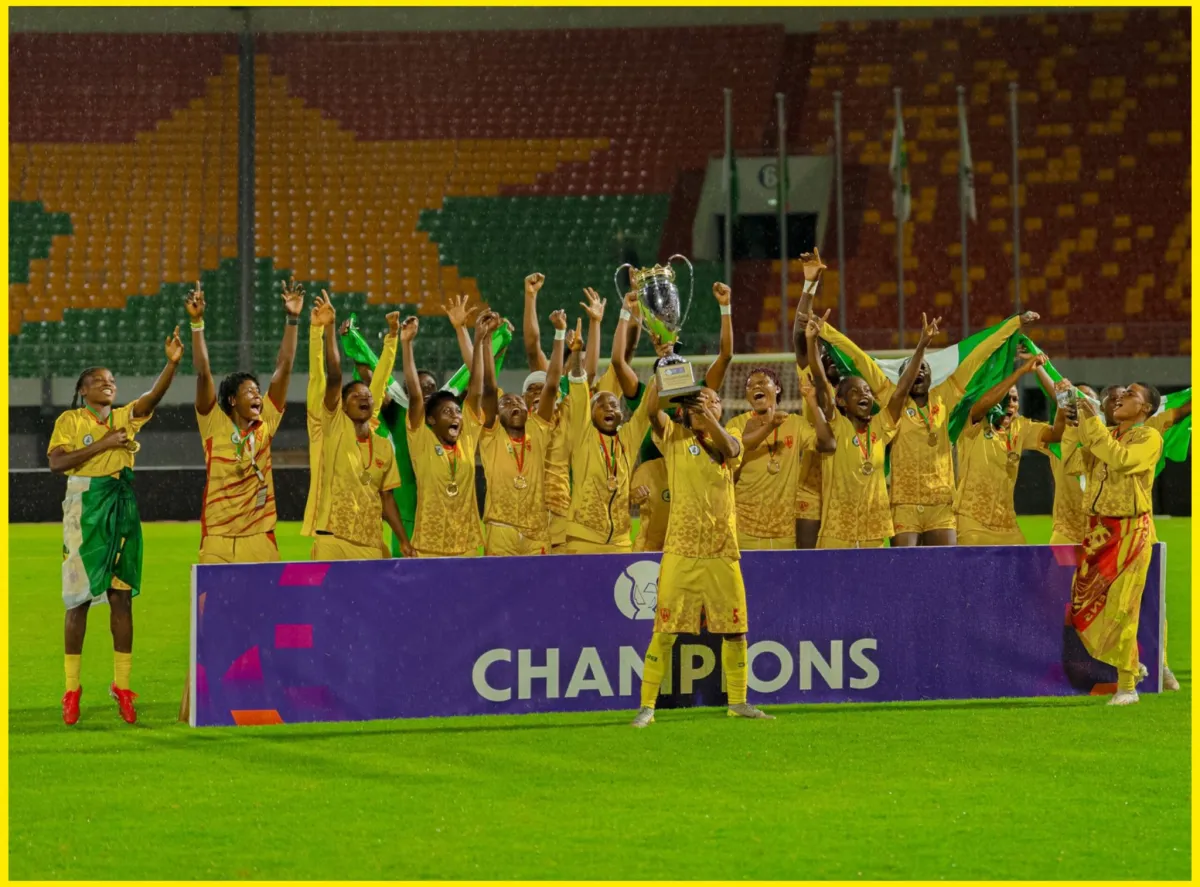
The annulment of Edo Queens’ victory in the WAFU B final of the CAF Women’s Champions League has plunged Nigeria’s women’s football into turmoil, with sharp criticism directed at the Confederation of African Football (CAF) for what many perceive as an arbitrary and unaccountable decision.
The controversy stems from the match’s outcome, which was settled by a penalty shootout—a contentious method that has left supporters and stakeholders questioning the integrity of the process.
At the heart of the backlash is Prince Harrison Jalla, chairman of the Advocacy for Nigeria Football Reform Initiative, who has publicly challenged CAF’s authority to overturn the result, demanding transparency on who authorized the shootout and why the original decision was reversed.
Jalla’s intervention underscores a broader frustration with CAF’s handling of high-stakes women’s football competitions, where administrative decisions often lack the scrutiny applied to men’s matches.
The annulment of Edo Queens’ triumph—earned through regulation time—has not only denied the team a hard-fought title but also raised doubts about the fairness of penalty shootouts in elite African football.
Critics argue that such outcomes, which can hinge on individual performance under pressure, undermine the credibility of the competition, particularly when the stakes are as high as continental glory.
The case has become a flashpoint for discussions about governance in African football, where transparency and accountability remain persistent challenges.
The controversy also highlights the broader struggle for recognition and reform within Nigeria’s football ecosystem.
Jalla’s advocacy group has long campaigned for systemic changes to address corruption, mismanagement, and a lack of investment in women’s football—a sector that has seen remarkable growth but continues to operate in the shadow of its male counterparts.
The CAF’s decision to annul Edo Queens’ victory, without clear justification or recourse for the affected parties, has further exposed the vulnerabilities in the continent’s football governance.
It raises critical questions about whether CAF’s structures are equipped to handle disputes fairly, especially in women’s football, where passion and ambition often outstrip institutional safeguards.
For Edo Queens, the fallout extends beyond the loss of a trophy.
The team’s players and supporters have expressed disbelief at the reversal, viewing it as a betrayal of their efforts to represent Nigeria on the continent’s highest stage.
The penalty shootout, a common but divisive method in knockout football, has become the focal point of the debate, with many questioning whether it should play such a decisive role in determining winners.
The absence of a clear appeals process or independent oversight has left the team without recourse, deepening the sense of injustice.
Meanwhile, the broader Nigerian football community watches closely, as the controversy could either spur much-needed reforms or further erode trust in CAF’s leadership.
As the dust settles, the Edo Queens case has become a litmus test for CAF’s commitment to fairness and reform.
Jalla’s call for accountability is not just about this single match but signals a growing demand for systemic change across African football.
The annulment of Edo Queens’ victory has turned a local controversy into a national conversation, forcing stakeholders to confront uncomfortable truths about the sport’s governance.
Whether CAF will address these concerns remains to be seen, but one thing is clear: the women’s game in Nigeria—and across Africa—cannot afford to ignore the lessons of this bitter defeat.